
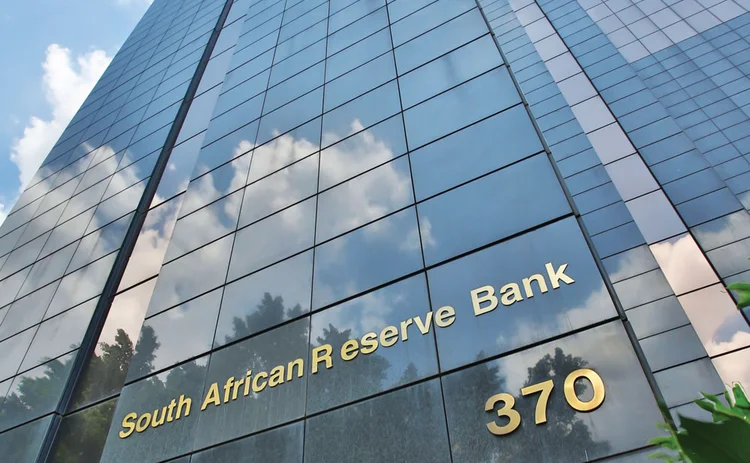
South Africa is set to launch the most transformative change to its cash system in decades. While digital payments have grown, physical cash still dominates about two-thirds of transaction volumes, with more than R180 billion ($10.7 billion) circulating across Africa’s most industrialised economy. Managing, transporting, and securing this cash costs roughly R90 billion annually, a burden largely borne by consumers, and crime accounts for 13% of that total. To tackle inefficiencies, reduce costs, and ensure financial inclusion, the South African Reserve Bank (SARB) has unveiled its Cash Smart Strategy, a plan that promises to modernise the nation’s cash ecosystem, expand accessibility, and reduce transactional costs for underserved communities.
At the core of this strategy is the creation of a cash-management utility jointly owned by banks, retailers, and other
stakeholders, modelled after the Netherlands’ Geldmaat. This utility would forecast cash demand, manage distribution, and replace the R480 million in indirect subsidies currently given to private cash-handling companies.
Additionally, ATMs, traditionally owned by banks like Capitec and FirstRand, would transition to white-label machines, enabling customers of any bank to access cash at minimal or zero cost. Pradeep Maharaj, head of SARB’s Payments Ecosystem Modernisation Programme, described the plan as “a very radical transformation of the industry,” with full implementation expected over three years. Stricter oversight, including potential licensing for cash-in-transit companies and major retailers such as Shoprite and Pick n Pay, would further ensure efficiency and security.
South Africa’s nominal GDP in 2025 is estimated to be around $420–426 billion, with slow growth of roughly 1.1%, driven by services (62.6%), industry including mining (24.6%), and agriculture (2.6%). High unemployment (~31.9%) and infrastructure bottlenecks continue to constrain economic expansion. The SARB, as the nation’s central bank, plays a critical role in supporting economic stability and growth. Its repo rate currently stands at 6.75%, and it has set a lower single-point inflation target of 3%, down from
the previous 3–6% range. Q3 2025 GDP growth came in at 0.5%, reflecting modest economic momentum amid structural challenges.
The SARB contributes to economic development through monetary policy, financial system oversight, and publishing economic data,
indirectly influencing investment and consumption. Its mandate extends beyond price stability to ensuring inclusive economic growth, making initiatives like the Cash Smart Strategy pivotal for supporting rural and low-income communities that rely heavily on cash for daily transactions. As Pradeep Maharaj notes, improving cash accessibility while reducing costs can strengthen financial
inclusion and support broader economic participation.
Globally, countries such as India, Brazil, and the European Union have significantly reduced cash reliance through digitisation, with
corresponding efficiency gains. South Africa aims for a 30–40% decline in cash usage once similar digital penetration levels are achieved. Unlike these economies, two-thirds of South African transactions still occur in cash, emphasising the importance of balancing modernisation with inclusivity. The Cash Smart Strategy, by integrating banks, retailers, and cash-in-transit operators, aims to streamline operations, cut consumer costs, and improve security, all while preserving cash access for vulnerable communities.
The white-label ATM model is a particularly significant innovation. Currently, ATM fees are disproportionately high for low-income
users, sometimes five times greater than urban, wealthier consumers. By enabling interoperability and shared access, the initiative could drastically reduce these fees and encourage broader adoption of formal financial services. Economically, this enhances liquidity distribution, lowers operational costs for banks, and could stimulate consumer spending, particularly in rural areas.
Pradeep Maharaj emphasises that this overhaul is not only about cost reduction but redefining the cash ecosystem to make it more
transparent, efficient, and inclusive. Jannie Rossouw, an honorary professor at the University of the Witwatersrand, highlights that while the transition may temporarily affect commercial bank revenues and seigniorage income, the long-term benefits of cheaper, safer, and more accessible cash outweigh these concerns. Analysts also note that integrating retailers like Shoprite and Pick
n Pay as licensed cash wholesalers could create additional revenue streams and operational efficiencies, bridging gaps between physical and digital payment infrastructures.
The SARB, founded in 1921 following post-WWI financial instability, is Africa’s first central bank. Initially privately owned, it focused on currency stabilisation and managing the gold standard. The rand was introduced in 1961, replacing the South African pound, while the apartheid era imposed a segregated financial system that excluded large segments of the population. Post-1994, SARB transitioned to inflation-targeting and broader economic management, overseeing national payment systems and ensuring inclusive growth. The Cash Smart Strategy represents the largest change in cash circulation since ATMs were introduced over 40 years ago,
reflecting a continuation of SARB’s mandate to adapt financial systems to contemporary economic realities.
South Africa’s Cash Smart Strategy faces several challenges that could affect its success, including high upfront costs for establishing the cash utility and converting ATMs, potential short-term revenue losses for commercial banks due to reduced fees and subsidies, logistical complexities in coordinating banks, retailers, and cash-in-transit firms, and the risk of financial exclusion for low-income and rural populations if the transition to digital payments outpaces access and adoption.
The Cash Smart Strategy presents South Africa with multiple long-term opportunities, including enhanced digital integration with mobile payments and fintech platforms, improved financial inclusion by lowering costs for underserved populations, and greater operational efficiency through reduced cash handling expenses and theft. By creating a more predictable and efficient cash system, the initiative also supports economic growth, liquidity, and effective monetary policy transmission, providing a stronger foundation for
sustainable development.
If successfully implemented, the strategy could position South Africa as a global benchmark for cash modernisation in emerging
markets, balancing digital adoption with equitable cash access. With R180 billion in cash still circulating and two-thirds of transactions relying on physical money, this historic overhaul, led by Pradeep Maharaj and supported by the SARB, aims to modernise financial infrastructure, enhance inclusion, and drive long-term economic stability and growth.
on 16 December 2025




0 Comments